Learning Outcomes:
i. Trace the historical evolution of the chromosomal theory of inheritance.
ii. Analyze the contributions of Correns to the understanding of chromosomal inheritance.
iii. Evaluate the significance of Correns' work in the development of genetics.
iv. Appreciate the importance of scientific inquiry and collaboration in advancing knowledge.
Introduction:
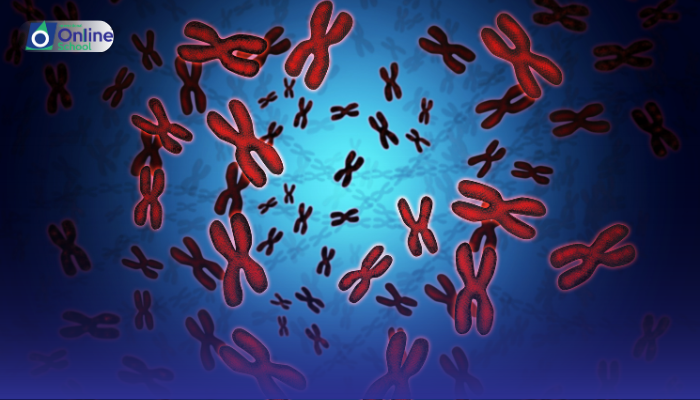
Imagine a world where tiny threads carry the secrets of life, determining our traits and characteristics. This is the realm of chromosomes, the microscopic structures within cells that house our genetic blueprint. Understanding how these threads transmit hereditary information has been a fascinating journey in the history of science, paved by the tireless efforts of dedicated researchers. Today, we embark on this journey ourselves, critically analyzing the development of the chromosomal theory with a special focus on the groundbreaking work of Carl Correns.
i. Early Glimpses into Chromosomes:
Before the dawn of the 20th century, the mysteries of heredity were shrouded in uncertainty. Gregor Mendel, a humble monk, laid the foundation with his experiments on peas, revealing the existence of discrete units of inheritance called genes. However, the mechanism of gene transmission remained a puzzle. Enter the stage, the enigmatic thread-like structures within cells, initially observed by Walther Flemming and named "chromosomes" by Heinrich Waldeyer-Hartz.
ii. Correns and the Rise of Chromosomes:
Carl Correns, a botanist working independently from Mendel, made crucial observations while studying inheritance in Mirabilis jalapa, a flowering plant. He noticed that certain traits, like flower color and pollen shape, were inherited together, suggesting a physical linkage between the genes responsible. This phenomenon, later termed "chromosome theory," challenged the prevailing theory of independent gene assortment.
Chromosomes as Carriers of Genes:
Correns' meticulous analysis led him to propose that chromosomes were not just passive structures but active players in inheritance. He postulated that genes resided on chromosomes in a linear arrangement, and their physical association explained the observed linkage. This marked a significant shift in thinking, paving the way for further research on chromosomal inheritance.
Independent Confirmation and Collaboration:
Correns' work, though initially met with skepticism, gained support from other prominent scientists like Hugo de Vries and Theodor Boveri. The discovery of X-chromosome inheritance by Walter Sutton, Clarence C. Little, and others further solidified the chromosomal theory. This collaborative effort, driven by meticulous experimentation and open exchange of ideas, laid the foundation for modern genetics.
iii. Correns' Legacy and Beyond:
Correns' contributions were instrumental in establishing the chromosomal theory as the dominant explanation for inheritance. His work not only provided insights into the mechanism of gene transmission but also opened doors for further research in cytogenetics, gene mapping, and eventually, the Human Genome Project.
iv. The Power of Scientific Inquiry:
Correns' story is a testament to the power of scientific inquiry and the importance of questioning established beliefs. His relentless pursuit of understanding, coupled with his meticulous observations and willingness to collaborate, contributed significantly to the advancement of genetics.
The journey of the chromosomal theory is far from over. New discoveries continue to refine our understanding of how chromosomes carry and transmit genetic information. However, the groundwork laid by pioneers like Correns remains essential. By critically analyzing their work, we appreciate the evolution of scientific thought, the value of collaboration, and the ongoing quest to unravel the mysteries of life encoded within our chromosomes.
